

Ask a car owner in Cape Town why they detail their car, and the answer is usually appearance. Ask someone in Saldanha, Vredenburg or Langebaan, and the honest answer should be survival. The West Coast is one of the harshest environments in South Africa for a vehicle’s paint, trim and undercarriage — and regular detailing here isn’t about vanity. It’s what stands between your car and permanent, expensive damage.
Most owners who move to the region, or who’ve simply lived here without thinking about it, are unknowingly applying an inland car care routine to a coastal-industrial environment that ages vehicles roughly twice as fast. This guide breaks down exactly why that gap matters, what it costs you if ignored, and what proper protection actually looks like.
Three Things Working Against Your Paint Right Now
Every vehicle on the West Coast is fighting the same three forces, whether it’s parked in a driveway, sitting in a work yard, or driven daily along the coastal roads.
1. Iron Ore Dust
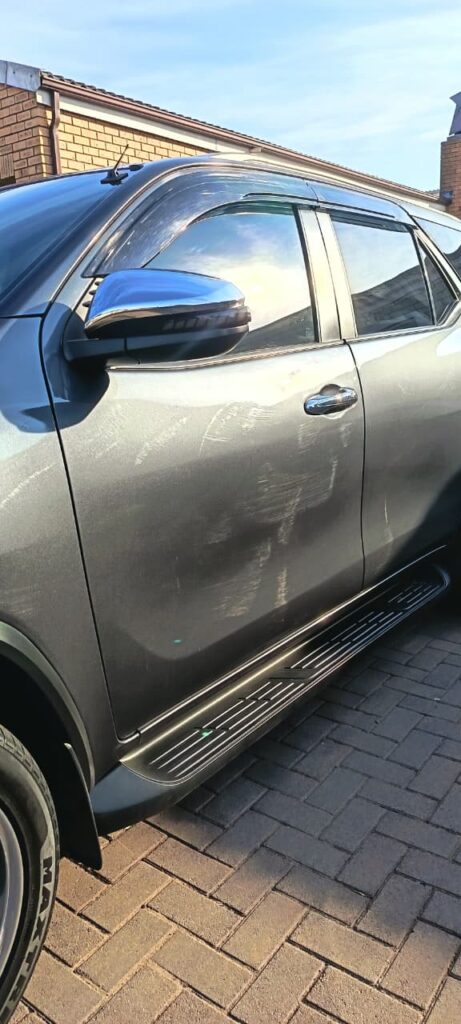
Dust from the Saldanha terminal is fine, hard and genuinely abrasive — closer to fine grit than ordinary road dirt. Left to sit, it works its way into every seam and panel gap. Worse, every time it’s disturbed by wind, rain, or a dry wipe with a cloth, those particles grind micro-scratches into your clear coat. Over months, this is what turns a glossy finish dull and swirl-marked, even on a car that looks ‘clean’ most of the time.
2. Salt Air
Salt-laden air off the Atlantic accelerates corrosion on chrome, badges, wheels and undercarriages far faster than inland conditions ever would. It doesn’t need direct sea spray to do damage — ambient salt in coastal air settles on every exposed surface daily. Left to dry, it also etches into paint, creating the dull, slightly hazy look many owners assume is just ‘normal ageing.’
3. UV Exposure
The West Coast sees some of the highest UV exposure levels in South Africa. This breaks down wax, sealant, and eventually the factory clear coat itself, far faster than in shaded or inland regions. UV damage is cumulative and mostly invisible until paint starts to visibly fade, chalk, or lose depth — by which point it’s already advanced.
Pro Tip: If you’ve moved to the West Coast from inland, assume your old detailing schedule is now too infrequent — these three forces combined age a car roughly twice as fast as a typical inland environment.
The Solution: Our packages are built around this reality from the ground up: pH-neutral foam washing that won’t strip existing protection, paint decontamination to physically lift embedded dust before it causes damage, and ceramic coating options that create a genuine chemical barrier against salt and UV rather than a temporary, wax-based shine.
The Cost of Skipping It
Unprotected paint on the West Coast typically shows swirl marks, dulling and early oxidation within a year or two — sometimes faster on vehicles parked outdoors near the harbour or terminal. At that point, a simple wash and wax is no longer enough. The vehicle needs proper paint correction, a machine-polishing process that removes the damage layer by layer, to undo what regular detailing would have prevented in the first place.
This is the part most owners don’t realise until it’s too late: what starts as an attempt to save money by skipping regular detailing almost always ends up costing significantly more once correction, not just protection, becomes necessary
It’s Also About What You Don’t See
The most expensive damage isn’t always on the surface. Salt-driven corrosion works quietly on undercarriages, wheel wells, brake lines and exposed metal fittings — areas most owners never inspect. It often goes unnoticed until it affects resale value, fails a roadworthy inspection, or requires genuine mechanical repair rather than cosmetic correction.
Pro Tip: Check your undercarriage and wheel wells periodically for early rust bloom — by the time corrosion is visible on painted panels, it’s usually already well established underneath.
The Solution: Regular detailing at West Coast Detailing includes exactly the areas owners tend to overlook — engine bays, undercarriages and trim — not just the parts that are visible from the outside. Our team knows what West Coast corrosion looks like in its early stages, because we see it every day.
Detailing Protects Resale Value, Too
A vehicle with faded, swirl-marked paint and early rust on the trim sells for noticeably less than an identical model that’s been properly protected — even if both have the same mileage and mechanical history. Buyers, and dealers doing trade-in valuations, notice paint condition immediately. Consistent detailing is one of the lowest-cost ways to protect what is, for most people, a significant financial asset.
Interior Protection Matters Just as Much
It’s easy to focus entirely on paint, but West Coast conditions affect interiors too. Sand and grit from beach trips act like sandpaper on carpets and seat stitching over time. UV exposure through windows fades and cracks dashboards, door panels and leather far faster than in shadier, cooler climates. A full interior treatment — not just a vacuum — protects these surfaces the same way exterior detailing protects paint.
Frequently Asked Questions
How often should I detail my car on the West Coast?
More often than you would inland — as a general guide, a maintenance wash every 2-4 weeks and a full protective detail (decontamination plus wax or ceramic coating) at least twice a year, more frequently if your vehicle is parked outdoors near the coast or the Saldanha terminal.
Is ceramic coating really necessary, or is wax enough?
Wax offers some short-term protection but breaks down within weeks under West Coast UV and salt exposure. Ceramic coating bonds to the paint itself and holds up for years rather than weeks, making it the more cost-effective option for anyone keeping their vehicle long-term.
Does mobile detailing protect my car as well as an in-shop detail?
Yes — our mobile unit uses the same products, equipment and process as our Saldanha base, so there’s no compromise on protection, only added convenience.
The West Coast Car Care Checklist
☐ Exterior Shield: Is there current wax, sealant or ceramic protection on the paint?
☐ Decontamination: Has embedded dust been chemically lifted, not just rinsed over?
☐ Corrosion Check: Have undercarriage, wheel wells and trim been inspected for early rust?
☐ Interior Protection: Are carpets, seats and dash surfaces treated against sand and UV?
☐ Wash Frequency: Is your car being washed often enough for local conditions, not an inland schedule?
Protecting Your Vehicle Starts Here
Detailing on the West Coast isn’t a luxury service — it’s basic maintenance for the environment you actually live in. West Coast Detailing builds every package, from a R900 maintenance wash to a full Legendary ceramic coating, specifically around these local conditions: iron ore dust, salt air and relentless UV. Click here to view our Ceramic Coating Packages and let us help protect your vehicle before the damage sets in, whether that’s at our Saldanha Studio or through our mobile unit anywhere across the West Coast.