
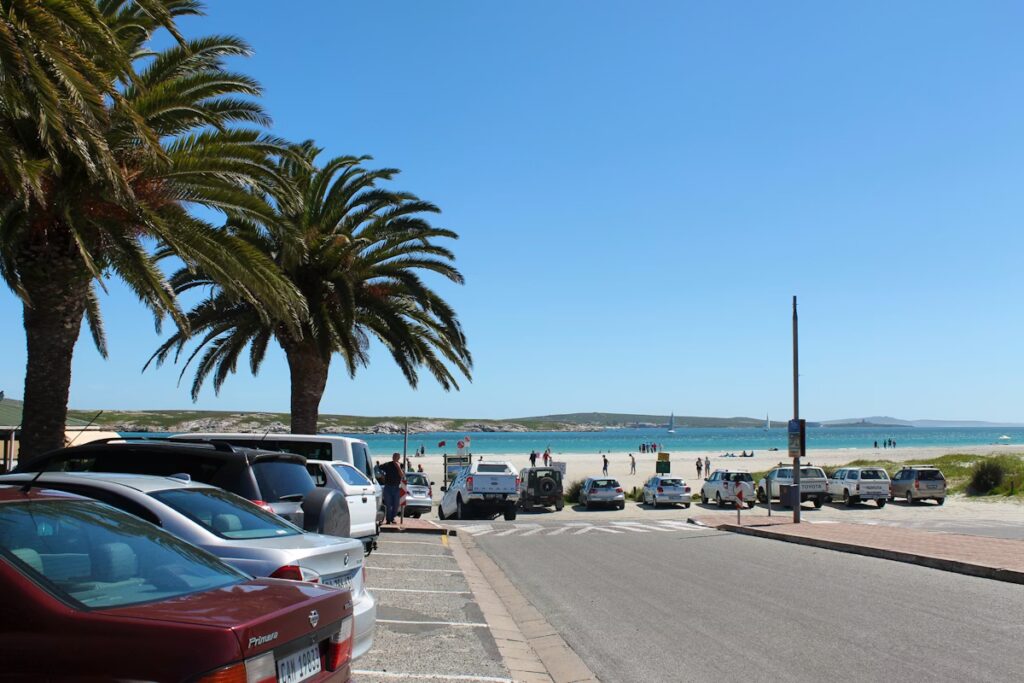
Langebaan is arguably one of the most beautiful jewels of the South African coastline. Between the turquoise waters of the lagoon and the sprawling beauty of the West Coast National Park, it is a paradise for residents and holidaymakers alike. However, for vehicle owners, this paradise comes with a hidden price: atmospheric salt.
If you live in Langebaan, your car is under constant biological and chemical warfare. The very air that makes the West Coast so refreshing is saturated with salt spray and high humidity, a combination that acts as a catalyst for one of a car’s greatest enemies—oxidation.
For decades, the go-to solution for local car enthusiasts was a good old-fashioned coat of wax. But as automotive technology has evolved, so have the solutions. Today, we look at why traditional wax is failing Langebaan drivers and why Ceramic Coating has become the gold standard for vehicle preservation in the West Coast.
The Science of Destruction: How Coastal Salt Destroys Your Car
Before we compare the solutions, we must understand the problem. Why is Langebaan particularly “tough” on cars?
1. Salt is Hygroscopic
Salt has a natural ability to attract and hold water molecules. When microscopic salt particles from the Atlantic breeze settle on your car’s paint, they don’t just sit there; they pull moisture from the morning mist or the humid air directly onto the metal surfaces and into tiny pores in the paint. This creates a saline solution that is highly conductive and incredibly corrosive.
2. The Electrochemical Reaction (Rust)
In the presence of salt and water, the iron in your car’s steel body undergoes a chemical reaction. This is an electrochemical process that accelerates the formation of iron oxide, better known as rust. While modern cars have better galvanization than older models, the “weak points”—such as door jams, wheel arches, and stone chips—remain highly vulnerable.
3. UV Radiation and Heat
Langebaan isn’t just salty; it’s sunny. The South African sun delivers high levels of UV radiation. This radiation breaks down the polymers in standard paint clear coats, making the surface porous. Once the paint becomes porous, it’s easier for salt to “anchor” itself into the finish, leading to that cloudy, faded look known as oxidation.
The Traditional Hero: Why Wax is No Longer Enough
For years, car wax was the only line of defense. Usually made from Carnauba (a natural palm wax) or synthetic polymers, wax provides a sacrificial layer over the paint. While it offers a beautiful deep shine, it has significant limitations in a coastal environment like the West Coast.
The Melting Point Problem
Natural Carnauba wax has a relatively low melting point (around 82°C). While that sounds high, the surface temperature of a dark-colored car sitting in the Vredenburg or Langebaan sun can easily exceed 70°C to 80°C. Under these conditions, the wax softens. Once soft, it actually traps salt and dust particles inside the wax layer, which can lead to micro-marring when you next wash the car.
Short Longevity
In the harsh winds of the West Coast, a layer of wax rarely lasts longer than four to six weeks. Every time you wash your car with a high-pH soap or even just drive through a heavy rainstorm, the wax layer thins. For a busy Langebaan resident, re-waxing a car every month is an unrealistic maintenance schedule.
Zero Resistance to Chemicals
Wax offers almost no protection against acidic substances. If a seagull at the Mykonos harbor leaves a “gift” on your hood, the acidity will eat through the wax and into your clear coat in a matter of hours.
The Modern Titan: What is Ceramic Coating?
At West Coast Detailing, we specialize in System X Ceramic Coatings. Unlike wax, which sits on top of the paint, a ceramic coating is a liquid polymer that chemically bonds with the vehicle’s factory paint.
Once cured, it creates a semi-permanent, glass-like layer that is incredibly hard and thin. Think of it as an extra layer of “super clear coat” that is significantly harder and more resistant than the paint it protects.
The 9H Hardness Factor
Ceramic coatings are rated on a scale of hardness. Most high-end coatings provide a 9H hardness rating. In layman’s terms, this means the surface becomes much more resistant to the fine scratches (swirl marks) caused by sand blowing off the dunes or improper washing techniques.
Why Ceramic Coating Wins in Langebaan (The Benefits)
1. Extreme Hydrophobic Properties
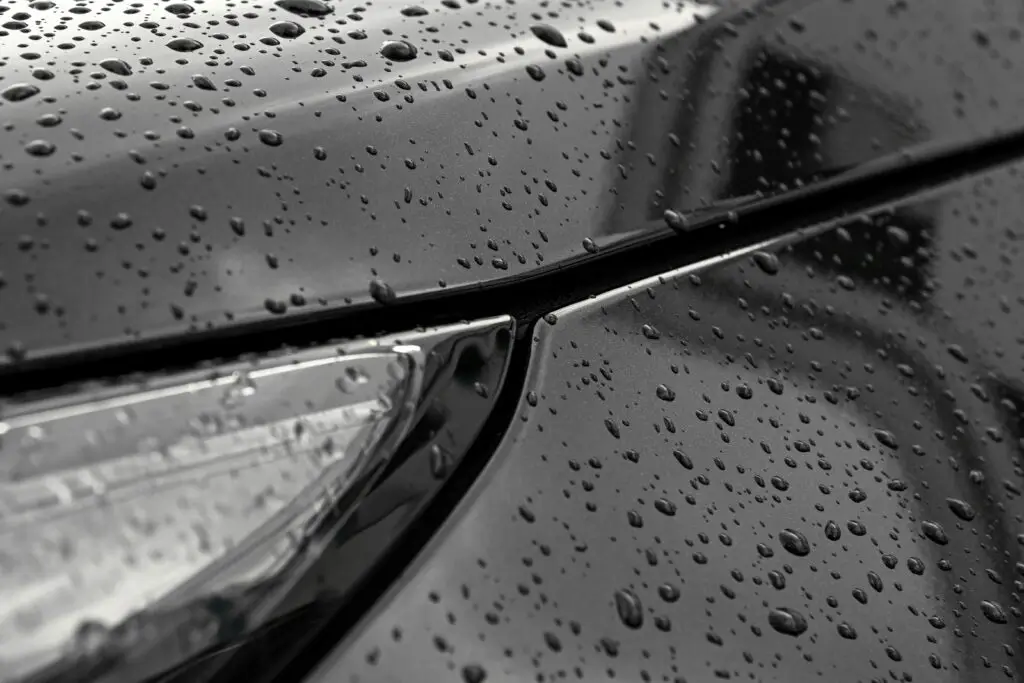
The most visual benefit of ceramic coating is its “water-hating” (hydrophobic) nature. Water doesn’t just sit on the surface; it beads up and rolls off, taking dirt and salt with it. For Langebaan owners, this means that even after a misty night, the salt doesn’t have the chance to settle and bond to the paint.
2. Protection Against “The Red Dust”
Being so close to Saldanha, many Langebaan cars are victims of iron ore fallout (the infamous red dust). This dust is metallic and can “bake” into the paint. Ceramic coatings create such a smooth, non-porous surface that these metallic particles struggle to find a foothold. Decontaminating a ceramic-coated car is significantly easier and safer than a waxed one.
3. UV Blockers
Ceramic coatings act like a high-SPF sunscreen for your car. They contain heavy-duty UV inhibitors that prevent the sun from oxidizing the paint. This keeps your car looking “showroom new” even if it spends its days parked outdoors near the beach.
4. Longevity Measured in Years, Not Weeks
While wax lasts a month, a professional ceramic coating can last anywhere from 2 to 8 years, depending on the package chosen (such as our System X options). This makes it a one-time investment that protects the resale value of your vehicle for the duration of your ownership.
5. Ease of Maintenance
We often tell our clients: “Ceramic coating makes your car self-cleaning.” While you still need to wash your car, the process becomes effortless. Dirt and salt can’t stick to the coating, so a simple touchless wash or a gentle hand wash is usually enough to restore the mirror-like finish.
The Comparison Table: Wax vs. Ceramic Coating
| Feature | Traditional Wax | Ceramic Coating |
| Durability | 1 – 2 Months | 2 – 8 Years |
| Hardness | Soft / Malleable | 9H (Glass-like) |
| Heat Resistance | Low (Melts in sun) | Very High (Up to 1000°C+) |
| Salt Protection | Moderate / Temporary | Exceptional / Permanent Bond |
| Maintenance | Requires frequent re-application | Easy “Wash and Go” |
| Resale Value | Minimal impact | High Impact (Preserves Paint) |
The Importance of Professional Application
You may see “ceramic sprays” at local Vredenburg auto shops. It is important to distinguish between a ceramic-infused spray and a professional-grade ceramic coating.
A true ceramic coating requires a clean-room environment and intensive Paint Correction. Before we apply a coating at West Coast Detailing, we perform a multi-stage machine polish to remove any existing swirl marks, salt deposits, or oxidation. If you coat over a scratch, you lock that scratch in for years.
Our process ensures that the paint is “atomically clean” before the System X coating is applied, ensuring a bond that can withstand the harshest South African conditions.
Is it Worth the Investment?
Many Langebaan residents wonder if the upfront cost of ceramic coating is justified. To answer this, consider the cost of a full respray or the loss of value when selling a “sun-faded” car. In the West Coast, a car’s condition is the first thing a buyer looks at. A vehicle that has been ceramic-coated from day one will always command a premium price because the paint underneath remains untouched by the salt and sun.
Furthermore, you save hundreds of hours and thousands of Rands over the years on waxes, polishes, and intensive detailing sessions.
Conclusion: Shield Your Investment
Living on the West Coast is a dream, but the environment is a nightmare for your car. Traditional waxing is a losing battle against the relentless combination of Atlantic salt spray, Saldanha iron ore dust, and the scorching Vredenburg sun.
Ceramic coating isn’t just a luxury for sports cars; it is a practical necessity for anyone who wants to preserve their vehicle in Langebaan. By choosing a permanent, hydrophobic, and UV-resistant shield, you aren’t just washing your car—you’re future-proofing it.
Ready to give your car the protection it deserves?
Don’t let the West Coast elements dull your shine. At West Coast Detailing, we are the region’s specialists in Ceramic Coatings and professional paint restoration. Whether you are in Saldanha, Vredenburg, or Langebaan, our team is ready to provide your vehicle with a world-class finish that lasts for years.
Click here to view our Ceramic Coating Packages or Contact Bradwin at 078 930 2328 to book your free paint assessment today.
West Coast Detailing – It’s Not a Job, It’s a Passion